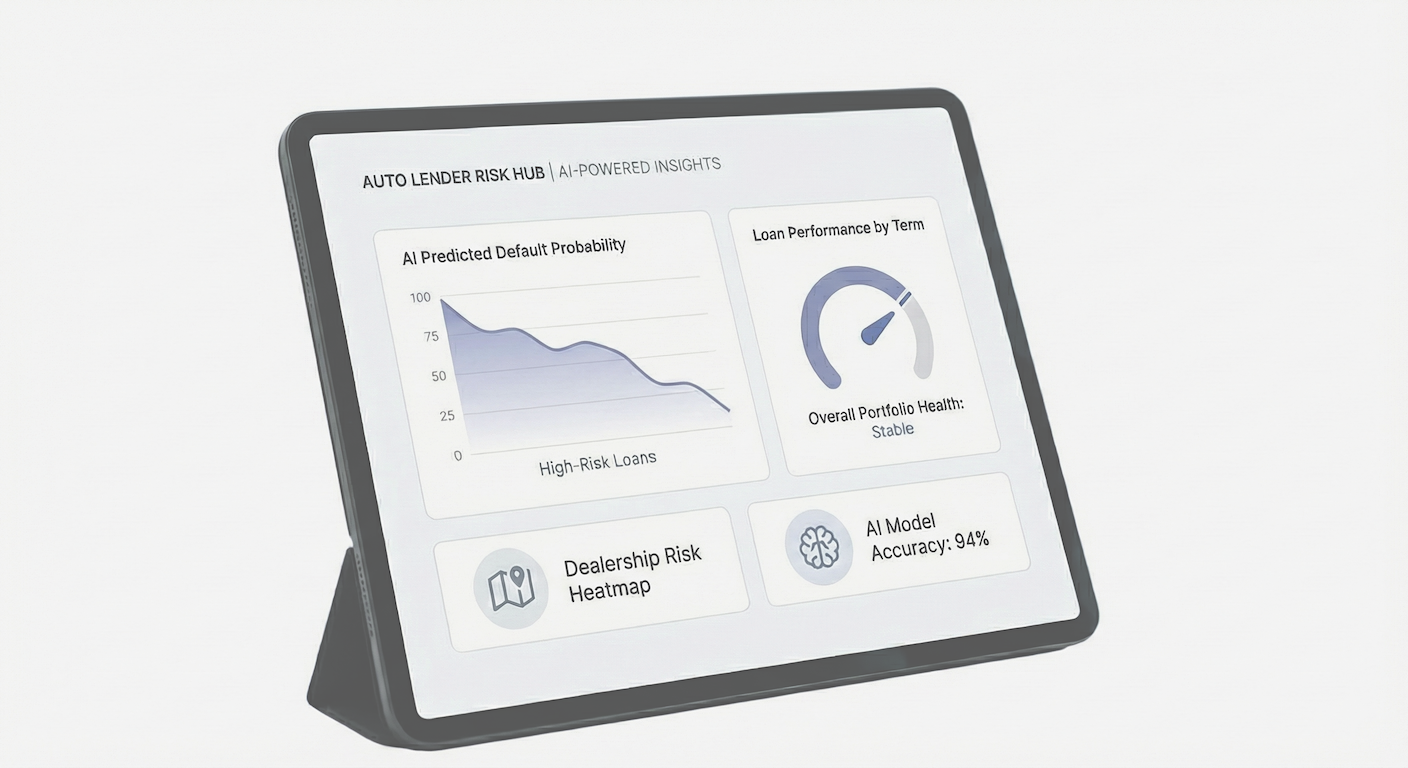
Beyond Borrowers: Why Dealer Risk is Your Next Blind Spot
While auto lenders have spent the last decade perfecting borrower risk assessment, an equally critical vulnerability has been hiding in plain sight: dealer risk. Beyond individual loan defaults, the financial health and operational integrity of your dealer network can make or break your portfolio performance. Yet most lenders still rely on outdated quarterly audits that miss critical warning signs for months at a time.
The stakes are higher than ever. With floorplan financing exposures often reaching millions per dealer, and fraud schemes becoming increasingly sophisticated, the traditional "audit and pray" approach is no longer sufficient. Let's explore how AI is revolutionizing dealer risk management, transforming reactive audits into proactive, continuous monitoring systems that catch problems before they explode.
The Broken Paradigm of Quarterly Audits
The Old Way: Flying Blind Between Checkpoints
Picture this scenario: Your risk team conducts an on-site dealer audit in January. Everything looks fine—inventory matches paperwork, sales are steady, payments are current. The next scheduled audit? April. But in February, the dealer starts experiencing cash flow problems. By March, they're double-pledging inventory and creating phantom sales to stay afloat. When your team arrives in April, the damage is done—you're looking at seven-figure losses that accumulated while you were looking the other way.
The Hidden Costs of Periodic Audits
- • 3-4 month blind spots between audits where fraud can flourish undetected
- • $50,000-100,000 per audit in travel, labor, and operational costs
- • 40% of issues discovered too late to prevent losses
- • Relationship strain from surprise audit findings and reactive interventions
This reactive model made sense in a simpler time when dealer fraud was less sophisticated and inventory moved predictably. But today's reality is different: fraudsters are tech-savvy, schemes are complex, and market conditions can shift overnight. The quarterly audit is like using a sundial to time a Formula 1 race—it's simply not built for the speed of modern risk.
The New Reality: AI-Powered Continuous Monitoring
Modern AI-driven dealer risk platforms have completely reimagined the monitoring paradigm. Instead of periodic snapshots, these systems create a living, breathing risk profile for each dealer that updates in real-time. Think of it as having a dedicated risk analyst watching every dealer, every day, flagging anomalies the moment they appear.
The Data Ecosystem Powering Real-Time Intelligence
AI platforms aggregate and analyze multiple data streams simultaneously, creating a comprehensive view of dealer health that was impossible with manual methods:
DMS Integration
Real-time sales data, inventory movement, and financial metrics directly from dealer management systems
GPS Tracking
Vehicle location data confirming inventory presence and identifying unauthorized movements
Document Analysis
Automated review of titles, registrations, and compliance documents for discrepancies
Market Analytics
Regional sales trends, competitive pressures, and market conditions affecting dealer performance
Critical Red Flags: What AI Sees That Humans Miss
The power of AI in dealer risk management isn't just speed—it's the ability to detect subtle patterns across massive datasets that would be impossible for human analysts to spot. Here are the critical warning signals modern systems monitor:
1. Inventory Anomalies That Signal Fraud
- Ghost inventory: Vehicles appearing in financing records but absent from physical lot or GPS tracking
- Velocity mismatches: Inventory turnover rates dramatically different from reported sales
- Age acceleration: Sudden increases in average inventory age indicating sales problems
- Geographic anomalies: Vehicles appearing at unexpected locations or moving between affiliated dealers suspiciously
2. Financial Distress Signals
AI systems excel at identifying the early warning signs of dealer financial trouble, often months before it becomes critical:
Sales Decline Patterns
20% month-over-month drop in retail sales velocity
Payment Timing Shifts
Floorplan payments consistently made at the last possible moment
Cross-Lender Alerts
Same dealer flagged for issues by multiple financing sources
3. Compliance and Process Deviations
Beyond fraud and financial distress, AI systems monitor for compliance issues that could expose lenders to regulatory risk or indicate systemic problems:
Compliance Red Flags Detected by AI
- • Unusual spike in "stated income" applications without verification
- • Pattern of loans just below documentation thresholds
- • Missing or delayed title transfers beyond normal timeframes
- • Concentration of deals with specific finance managers indicating potential kickback schemes
The Competitive Imperative: Act Now or Fall Behind
The transition from periodic audits to continuous AI monitoring isn't just an operational improvement—it's becoming a competitive necessity. Major lenders like Hyundai Capital America have already made the shift, setting new industry standards for risk management.
The Cost of Inaction
Lenders still relying on quarterly audits face mounting disadvantages:
- 1. Higher loss rates as sophisticated fraudsters target lenders with outdated monitoring
- 2. Talent drain as risk professionals prefer working with modern tools
- 3. Regulatory scrutiny as authorities will soon expect real-time risk management
- 4. Dealer defection to lenders offering more collaborative, data-driven partnerships
The message from industry leaders is clear: continuous AI-powered dealer monitoring is no longer optional—it's the new baseline for responsible risk management. As one industry publication recently stated, this represents "the biggest change in how auto lenders manage risk in decades."
The question isn't whether to make the transition, but how quickly you can implement it before your competition gains an insurmountable advantage. In the high-stakes world of auto lending, where a single dealer failure can mean millions in losses, can you afford to keep flying blind between quarterly audits?
Ready to Transform Your Dealer Risk Management?
Join leading auto lenders using AI to detect dealer fraud faster and reduce losses.
Related Resources
Portfolio Maintenance: The Unsung Hero of Fraud Prevention
Learn how AI-powered portfolio maintenance is redefining fraud detection in auto lending through continuous borrower monitoring.
Industry InsightWhy AI-Driven Portfolio Maintenance is the New Credit Risk Advantage
Discover how continuous monitoring and AI-powered risk assessment are transforming competitive dynamics in auto lending.